


Building trust with patient before the first appointment
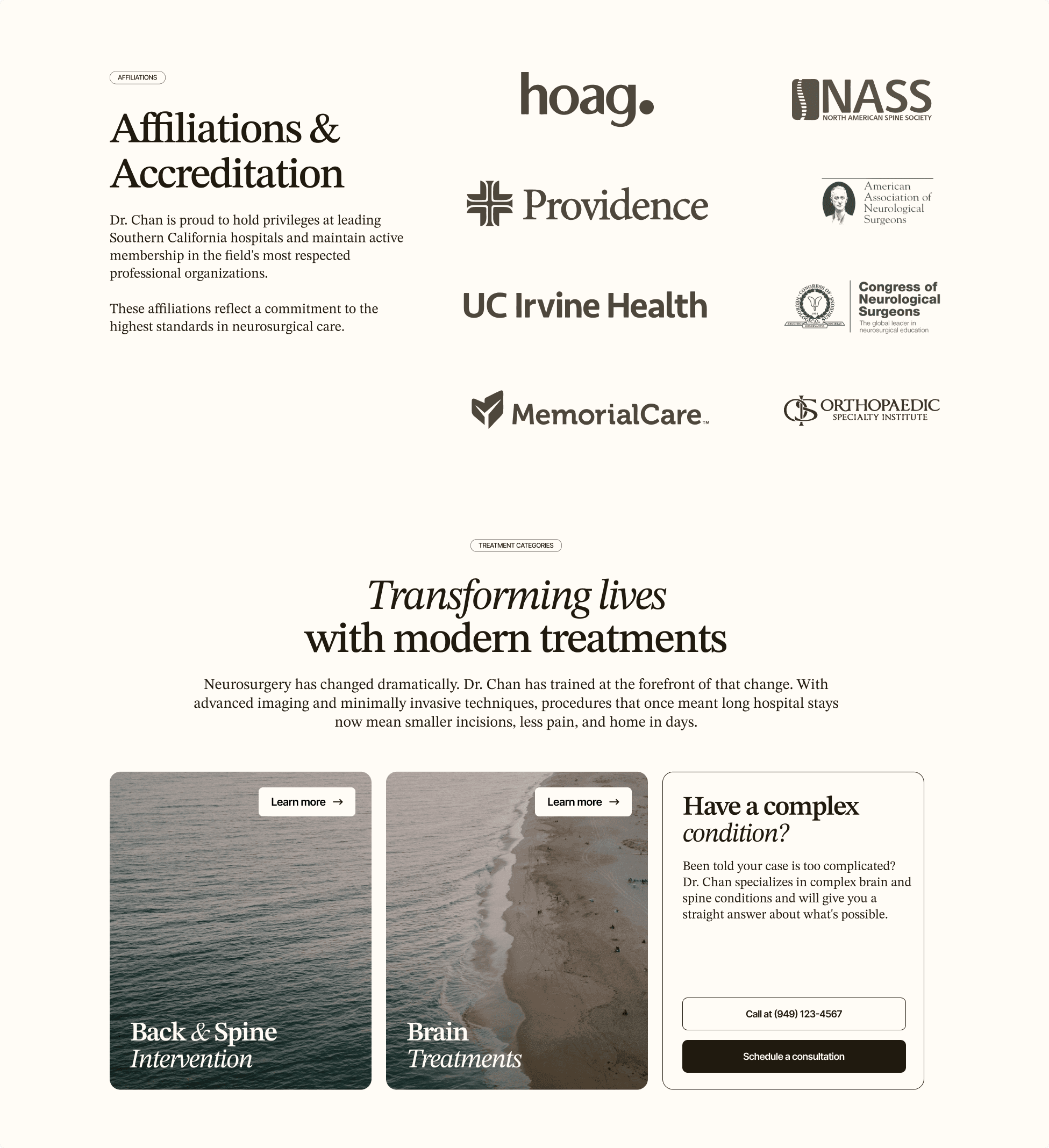
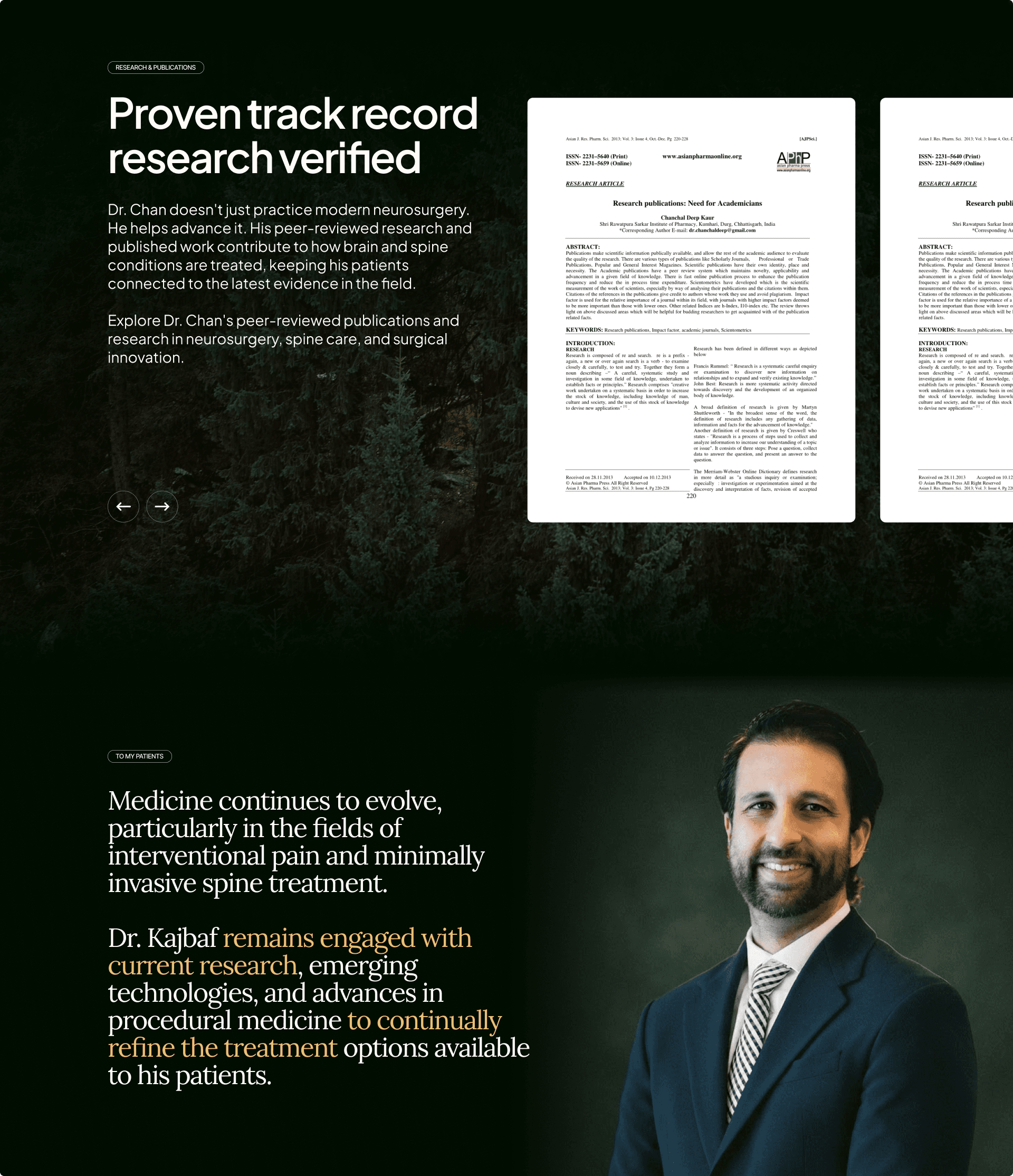
A collection of premium healthcare websites designed for private-practice surgeons, translating complex clinical expertise into clear, patient-centered experiences that educate prospective patients and create a direct path to consultation.
For many patients, the website is their first interaction with a surgeon. Before scheduling an appointment, patients need to understand who the physician is, what they specialize in, whether their condition can be treated, and why they should trust that provider.

Healthcare
2
Figma, Next.js, Premier Pro
~60 Days
Challenge
How might we make complex surgical expertise understandable, credible, and actionable?
Surgical practices have an unusual UX challenge: the information patients need is often highly technical, while the people consuming it may have little medical background.
The websites needed to communicate clinical authority without overwhelming patients, while also creating a premium experience appropriate for specialized private practices.
Trust → Clarity → Discovery → Confidence → Schedule
Results
The result was a set of patient-centered, conversion-focused websites that transformed complex surgical expertise into clear, approachable digital experiences. Each site established a stronger physician brand while improving how patients discover conditions, understand treatment options, evaluate expertise, and move toward consultation. The system also created a scalable UX and design framework that could be adapted across multiple surgical practices without sacrificing individual physician identity.
Process
01 - Discovery
Interview the surgeon to understand their practice, specialties, patient population, differentiators, clinical philosophy, and goals. Audit existing content and competitive practices to establish the foundation for the experience.
Stakeholder Interviews · User Research · Competitive Analysis · Discovery
02 - Architect
Translate clinical expertise into a patient-centered content and information architecture. Define the sitemap, patient journeys, core page types, content hierarchy, and conversion pathways.
Information Architecture · UX Strategy · Patient Journey · Content Strategy
03 Design
Develop wireframes and interactive prototypes, then translate validated UX into high-fidelity visual designs aligned with the surgeon's brand and positioning. Establish the responsive design system, typography, imagery, components, and page templates.
Wireframing · Prototyping · UI Design · Design Systems · Responsive Design
04 - Refine & Iterate
Review designs with the surgeon and stakeholders, validate content hierarchy and patient flows, and iterate based on feedback. Resolve usability, responsive, accessibility, and implementation considerations before development.
Usability Testing · Iteration · Accessibility · Design QA · Stakeholder Review
05 - Deliver
Prepare final assets and specifications, collaborate through development, and perform final responsive and visual QA before launch. Ensure the finished website accurately reflects the approved UX, brand, content, and technical requirements.
Design Handoff · Design Engineering · QA · Responsive Testing · Launch










“Troy was fast, responsive, and incredibly adaptable. He quickly understood the unique needs of our specialty and translated them into a polished, patient-focused website. Communication was seamless, and delivery exceeded our expectations.”

Alvin Chan, MD
Neurosurgeon, Owner of Chan Neurosurgey


Conclusion
Delivered end-to-end as a solo designer, the project moved from strategy and structure through UX, visual design, content, and final implementation with speed and consistency.
The result is a comprehensive digital experience tailored to the needs of a specialized private practice without the overhead or handoffs of a larger team. By balancing rapid execution with thoughtful design decisions, the final sites gave the practice a polished, credible presence built around its patients and specialty.

